















































































































































Is your content part of AI search’s emerging trust economy, or are your signals still a scattered mess?
By trust economy, we’re referring to the seven layers of verifiable signals AI models rely on to cite content and recommend brands.
In this new environment, structured data and APIs are the connective tissue behind brand credibility.
Here’s why:
- APIs feed real-time, authenticated data directly to AI systems like ChatGPT
- Structured data for AI search, like schema markup, is the most accessible layer of verified data for most websites.
When optimized together, they ensure AI systems understand who you are and trust the accuracy of your content.
In other words, your brand will have a smoother path through all seven layers of trust signals when APIs and structured data are working in sync.
In this post, we’ll break down the mechanics of the new trust economy from an SEO perspective and share actionable ways to implement structured data and APIs for stronger, verifiable brand authority.
What Is the AI Trust Economy? Where Did It Come From?

The shift to AI-powered search systems has altered the way brand trust is evaluated online.
Instead of ranking content based on keyword matching and link signals, AI systems verify entities and cross-check sources so they can synthesize direct answers to user queries.
This new paradigm birthed the AI trust economy, which is a multi-dimensional system of trust signals layered on top of core algorithm outputs (classic search).
In other words, AI didn’t replace organic search; it integrated with it.
AI-powered features like vector embeddings and cross-attention are layered on top of traditional keyword matching and on-page signals.
In particular, there are seven verifiable AI trust signals that determine if a brand is provably credible and worthy of citing.
Explained briefly, they are:
- Core algorithm output (base ranking) – This is the foundational relevance score from traditional SEO signals like keywords, links, and content quality.
- Embedding similarity – This is the semantic match between the query and your content’s vector embeddings (numerical representations of concepts and word meanings).
- Cross-attention – Embeddings have the tendency to drift off topic, so AI models use cross-attention to gain back any lost context (most typically negation).
- BM25 keyword matching – This is the classic keyword-term frequency signal that search engines have used for decades. In AI search, it’s a supplementary signal that helps ground search results in relevant language.
- PCTR (user engagement signals) – Predicted click-through rate based on historical engagement patterns like dwell time and bounce rate. These signals exist to ensure AI models source content that users actually enjoy consuming.
- Freshness – Recency signals, which happen to be heavily influenced by real-time data fed by APIs.
- Boost/bury (business policies and safety overrides) – These are manual or algorithmic overrides for authority or trust violations. They also ‘boost’ brands with strong reputations and business partners.
Check out our in-depth breakdown of all seven AI trust signals for a more detailed analysis.
How Do APIs Integrate With AI Search Systems?
Next, let’s examine the roles APIs play in the AI trust economy.
APIs aren’t just developer tools; they’re a real-time pipeline feeding AI systems with verified, machine-readable data.
Whenever an AI system like ChatGPT or Perplexity needs to retrieve fresh stats, inventory, pricing, or events, they pull directly from APIs.
This is a far more efficient process than trying to scrape potentially outdated web pages. Web scraping is a slow process, and not every web page contains structured data or fresh information.
Here’s an overview of the API-to-data flow:
- Direct integration. AI platforms flock to APIs like Google Merchant Center, OpenTable reservations, and stock tickers to fetch live data. Therefore, your API’s product feed becomes the source of truth for queries relating to your latest prices.
- Embedding enrichment. APIs provide structured payloads (JSON) that help refine semantic embeddings. This enrichment can help persuade LLMs to view your brand as the leading authority figure for relevant queries.
- Freshness signals. Using an API is one of the quickest and most reliable ways to signal freshness to AI search systems. AIs are trained to bury stale websites, so API-connected brands tend to dominate real-time results.
- Cross-attention boost. AI models strengthen cross references to your entity whenever they encounter consistent API data across multiple aggregators, like Google Shopping or Bing Markets.
As you can see, API use directly integrates with AI search, and it directly improves multiple key trust signals (freshness, cross-attention, and embedding similarity).
Examples of APIs boosting AI visibility
Here are a few real-world examples of how API integration improves AI search visibility.
An eCommerce store uses a product API to sync its inventory to Google Merchant. An AI system receives a ‘best (product) near me’ search and answers by quoting the eCommerce stores’ live stock levels from Google Merchant.
A local doctor’s office sets up appointment APIs with IndexNow and schema markup. This signals their appointment availability directly to AI systems and search engines.
A financial news website uses real-time APIs to power Google’s AI Overviews and generative AI summaries with verified facts instead of scraped noise.
These are just a few ways businesses can leverage APIs to boost trust with and gain visibility on major AI search platforms. Regardless of your industry, it’s possible to develop an API (or use an existing one) to feed AI systems with real-time, verifiable data from your business.
AI models will always favor machine-readable sources over scraped HTML, so you have every incentive to integrate APIs.
The Basics of Structured Data for AI Search

Structured data, primarily JSON-LD schema markup, serves as your website’s machine-readable business card.
Where APIs handle real-time data feeds, schema provides the foundation for telling AI systems ‘who you are, what you sell, and why they should trust you.’
Without schema markup, your content is ambiguous and requires LLMs to infer entities from context clues, which can lead to inaccuracies and misconceptions.
Whenever schema types like Organization, Person, and attributes like sameAs are present, LLMs can clearly disambiguate content for extremely accurate, fast parsing.
In terms of the AI trust economy, schema markup directly feeds the embedding similarity and cross-attention layers.
Clean Organization, Product, and LocalBusiness markup help AI models match your entity to user queries and cross-reference your brand across the web.
Also, some guides falsely claim that structured data is a ranking factor for AI models, but this isn’t accurate. Structured data like schema markup provides clarity, not authority.
In other words, the presence of JSON-LD schema markup won’t do anything to improve the trustworthiness of a brand that lacks positive reviews, editorial backlinks, and third-party brand mentions.
What it does do is highlight key entity relationships so that AI models can pick up on a website’s existing authority. Without schema markup in place, an AI system may fail to realize that a brand is actually authoritative and worthy of citing. Structured data simply helps AI systems connect the dots.
Core schema types every brand should implement
Here are the most essential schema types that you should implement regardless of your niche:
| Schema Type | Purpose | Key Properties | AI Search Impact |
| Organization | Brand identity and contact information | name, sameAs, logo, contactPoint | Entity recognition and cross-attention boost |
| LocalBusiness | Service area and hours of operation | address, openingHours, geo | Local queries, freshness signals |
| Product | Pricing and availability | name, offers, availability, aggregateRating | Shopping and eCommerce answers |
| Person | Author E-E-A-T | name, jobTitle, worksFor, sameAs | Trust signals for YMYL content |
| FAQPage | Question and answer pairs | mainEntity.question, mainEntity.acceptedAnswer | Direct snippets for AI Overviews and generative summaries |
| HowTo | Step-by-step guides | step.name, step.text | Featured instructional answers |
How to Optimize for APIs and Structured Data
So far, we’ve covered the individual pieces behind the AI trust economy. Now, it’s time to put them both together into an actionable playbook you can use to optimize your online presence with APIs and structured data.
Here’s a step-by-step checklist.
Audit current signals
First, you need to figure out where you currently stand, so you should audit your site’s trust signals as they stand right now.
To do so, pull up Google’s Structured Data Testing Tool and run the Rich Results Test and the Schema Markup Validator. 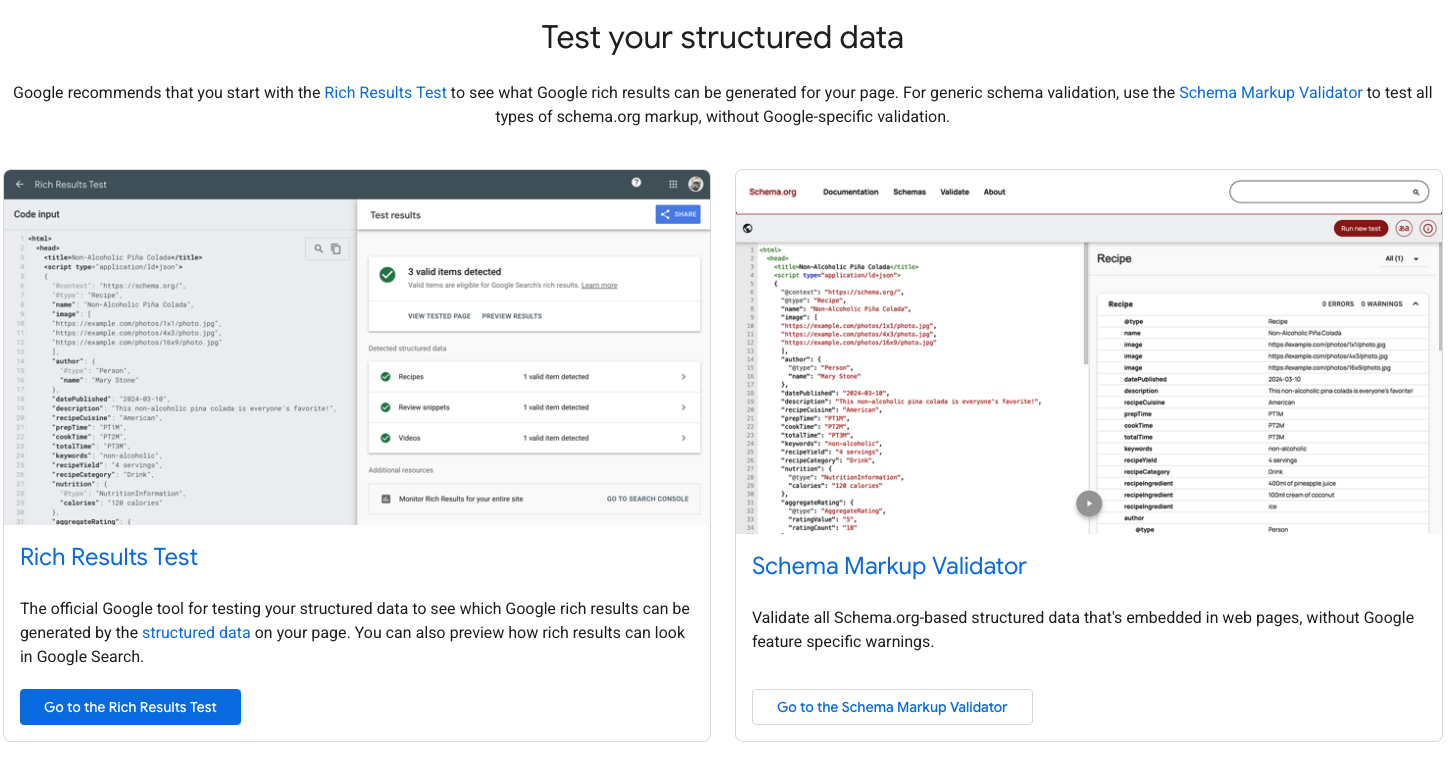
Start with the Rich Results Test. All you have to do is enter your URL to see if your site currently qualifies for rich results. 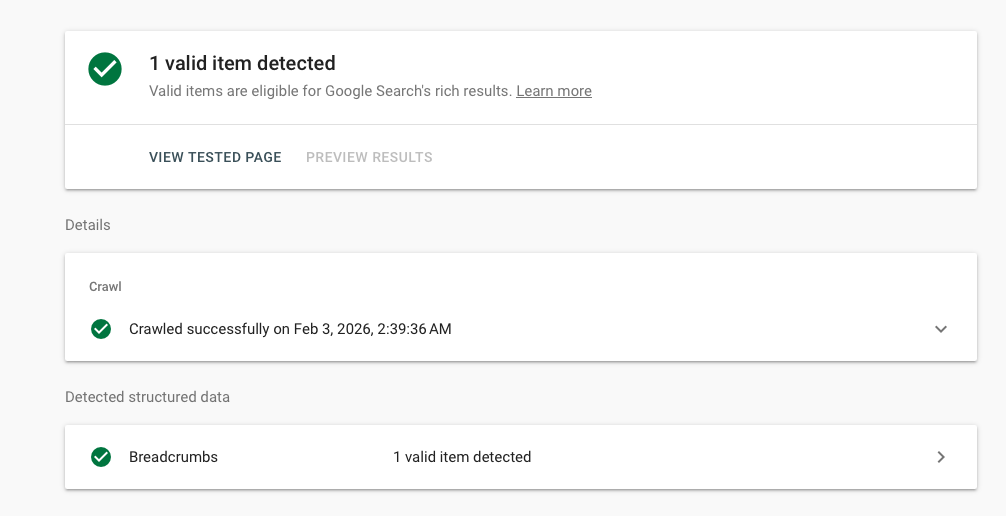
This is useful because it’s basically an instant schema verifier. If you qualify for rich results like AI Overviews and Shopping carousels, it’s a sign that you’ve properly implemented your schema.
The Schema Markup Validator takes things a step further and enables you to audit each line of your markup. Along the way, ensure sameAs consistency across your social profiles, Wikidata, and Crunchbase. 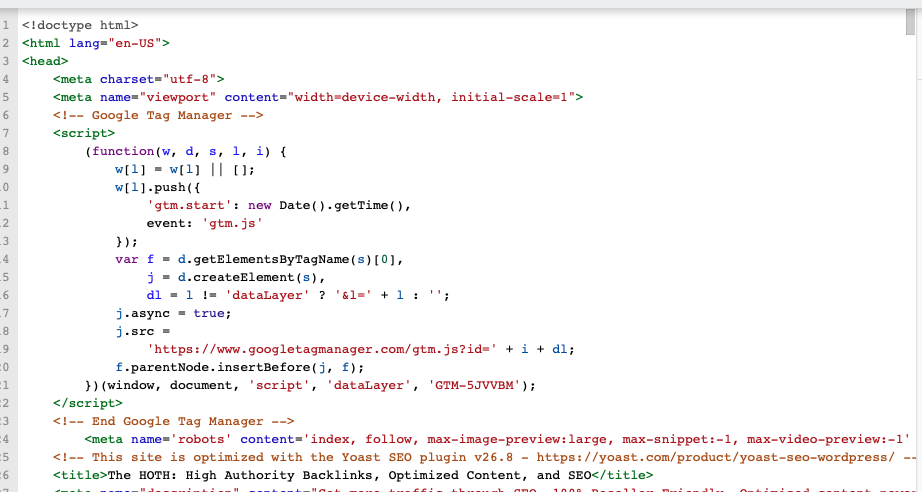
Also, keep an eye out for live data opportunities like pricing, inventory, and appointments, as they can inform your API strategy.
Implement core schema markup foundation
Next, you need to implement the core schema markup types mentioned previously across your entire site.
Here’s an example using the Organization schema type with the sameAs property:
<script type=”application/ld+json”>
{“@context”:”https://schema.org”,”@type”:”Organization”,”name”:”Your Brand”,”sameAs”:[“https://wikipedia.org/wiki/YourBrand”,”https://linkedin.com/company/yourbrand”],”logo”:
“https://yourbrand.com/logo.png”}
</script>
For validation, ensure each page passes the Rich Results test with zero errors.
Launch lightweight APIs 
You don’t need to go broke hiring web developers to create custom APIs for your website. Instead, any marketer can expose live data to AI systems in just a few hours using readily available tools.
If you use WordPress, you already have a live data feed at ‘yoursite.com/wp-json/wp/v2/posts.’
You’ll see JSON with all your posts, pages, and metadata, and AI tools can read it instantly.
Shopify stores also serve their full catalog at yourstore.myshopify.com/products.json. You’ll find all your live products, prices, and inventory, all in a machine-readable format that’s ready for Google Merchant or AI consumption.
If you don’t use either platform, you can use:
- RSS to JSON converter – Take your RSS feed and paste it into rss2json.com. Copy the URL it generates, and you’re done. AI can read it forever.
- Google Sheets – Create a spreadsheet containing columns like Product, Price, and Stock. Share it with ‘anyone who has the link,’ and use Sheety to turn it into a JSON feed.
- Airtable – This option is really easy. Simply place your data in Airtable, and turn on API access in the settings.
Monitor progress and ensure synergy
The real magic happens when APIs (live data) and structured data (entity foundation) work together.
Without schema markup, APIs are just raw data. Without APIs, schema types are just static claims. Yet, when they appear in tandem, they create a self-reinforcing trust loop that maximizes all seven AI ranking signals.
Here’s an example of the two working hand-in-hand:
<script type=”application/ld+json”>
{
“@type”: “Product”,
“name”: “Widget”,
“offers”: {
“price”: “29.99”, // Matches your API’s current price
“availability”: “InStock” // Matches your API’s current stock
},
“brand”: {“@type”: “Organization”,”name”: “Your Brand”}
}
</script>
The schema properties for price and availability match your API, enabling synergy. That ensures that AI systems will see a verifiable entity plus live data, which provides maximum trust.
Here’s a sample timeline for monitoring your progress:
- Weeks 1 – 2: GSC shows rich results eligibility
- Weeks 3 – 4: AI queries begin citing your live data
- Week 6+: Consistent AI citations
Wrapping Up: APIs and Structured Data for AI Search
To summarize, APIs and structured data are both integral for participating in the AI trust economy.
Proper implementation ensures cohesion across all seven trust layers, which is a necessity for earning consistent AI citations.
Do you need expert help optimizing your website for AI search systems?
Reach out to our expert team for an in-depth technical assessment.