















































































































































Back when backlinks were the primary proof of authority on search engines, higher DR meant more power.
Today, a new authority paradigm has emerged with LLM-based search systems.
Backlinks aren’t irrelevant, but they’ve been absorbed into a richer, vector authority model powered by context, intent, and entity understanding.
In other words, backlinks are one signal in a larger authority graph that also includes:
- Entity consistency
- Embedding similarity
- Brand mentions
- Topical depth
- Engagement signals
Vector authority refers to the way AI systems numerically model how much they can trust your brand across thousands of context signals, not just backlinks.
As a result, the future of link-building requires a mindset shift from ‘improving DR scores’ to ‘engineering a credible identity for our brand.’
The overall search landscape is shifting toward generative answer engines instead of organic search results (10 blue links), and AI models need trusted, high-quality sources they can cite with strong levels of confidence.
In this guide, we’ll provide an in-depth analysis of how vector authority works, including how to reframe your link-building strategy to include entity reinforcement.
What are the Basics of Entity Credibility?

Before you can start building vector authority, you need to ensure AI models recognize your brand as a distinct, authoritative entity in your field.
In particular, there are three basic pillars of entity credibility:
- Clarity (consistent identity signals)
- Topical focus (the level of depth in your content)
- Corroboration of brand quality across the web (backlinks and third-party brand mentions)
Together, these elements form a stable identity that LLMs can consistently recognize. Once your brand is solidified as an entity, you’re capable of actually earning authority instead of just collecting links.
Here’s a closer look at each aspect of entity credibility.
Clarity: Ensuring AI models know exactly who you are 
Before LLMs can start citing your content, they need to resolve who you are. Until entity resolution takes place, your content, links, and mentions exist as scattered, fuzzy signals.
If you don’t optimize for clarity, AI models may have difficulty with:
- Disambiguating your content (separating your brand from similar concepts and ideas, like the difference between apple, the fruit, and Apple, the tech company).
- Associating each piece of content, link, and mention directly to your brand.
For instance, if you aren’t consistent with your brand name, an AI system may mistakenly recognize you as two separate identities, diluting your authority.
An example would be going by ACME on your website, but ACME Co. on your social media profiles and third-party brand mentions.
Therefore, NAP (name, address, phone number) consistency is paramount for entity clarity.
Also, implementing structured data is crucial for entity linking and disambiguation.
Schema markup types like Organization, Person, and attributes like sameAs let LLMs and algorithms know exactly who you are (and where else you appear online).
If an LLM comes across the unstructured terms ‘AI SEO agency,’ ‘St. Petersburg,’ and ‘Next Net,’ it treats them all as disconnected keywords.
However, that changes with the presence of schema markup:
{“@context”:”https://schema.org”,”@type”:”Organization“,”name”:”Next Net AI SEO Agency“,”address”:{“@type”:”PostalAddress“,”addressLocality”:”St. Petersburg, Florida“},”sameAs“:[“https://twitter.com/nextnet”,”https://linkedin.com/company/nextnet”]}
If an LLM comes across this structured information and it’s consistent across 50+ directories and websites, the LLM resolves it as a single entity.
Topical focus: Depth beats breadth

AI models favor sources with concentrated, demonstrable expertise over generalists that cover dozens of topics (but none in great detail).
The way to signal topical authority to LLMs is to produce consistent, high-quality content that fleshes out your topical universe.
However, you shouldn’t choose topics at random.
In the same way that unclear entities produce fuzzy signals, a blog full of standalone posts creates a fuzzy topical profile.
Without clearly defined topic clusters and hubs, your content appears as disconnected fragments instead of a coherent authority graph.
To provide clarity, focus on 3 – 5 topic clusters that directly relate to your core products and services.
For each pillar page, include:
- Cluster pages that flesh out each subtopic
- Internal links connecting clusters to pillars (and vice versa)
- 20+ supporting assets per cluster
In terms of supporting assets, use things like:
- Infographics
- How-to images
- Videos
- Charts
- Tables
- Downloadable templates
- Free interactive tools
- Checklists
Enriching your content with these types of assets serves a few purposes. First, they increase dwell time (especially videos) and encourage social shares. This is valuable not only for your user experience, but also for your AI search visibility since LLMs prefer content that users actually engage with on a regular basis.
Next, they provide comprehensive coverage of your core topics, which signals topical authority to AI models.
Off-site trust signals: backlinks and third-party brand mentions

The final pillar of entity credibility is external corroboration from known entities that your brand is relevant and trustworthy.
In this sense, editorial backlinks and brand mentions are the most powerful ‘authority endorsements’ you can earn online.
Editorial mentions are non-paid, context-driven references to your brand in third-party publications. They provide a level of human oversight and fact-checking that helps verify your entity’s credibility to LLMs.
An example would be a journalist choosing to quote your CMO in an article related to your niche on a respected news outlet like Reuters.
In this scenario, the journalist chose to include the quote because it provides genuine news value, expertise, and a relevant viewpoint for their audience.
In other words, it’s an honest reflection of your brand’s credibility and not a paid promotional spot or a link on a random directory.
Also, news outlets have a legal obligation to report the truth, so there’s an additional layer of trust built in with relevant news mentions and backlinks.
That said, editorial mentions do not have to hail exclusively from news organizations and media outlets. They can also come from:
- Influencer and industry ‘best of’ roundups
- University research papers and industry whitepapers
- Trade publications and expert industry blogs
- Credible review aggregation sites
- Government and industry association sources
These all carry editorial weight because they’re earned through actual expertise and cannot be purchased.
Understanding Vector Authority: How it Differs from Classic Authority

As a reminder, vector authority is the multi-dimensional representation of your brand’s trust and relevance in AI systems.
This is in stark contrast to how authority used to work on classic search engines. Back then, authority was one-dimensional and focused on raw link metrics. The higher your DR score, the more authoritative your site was to search algorithms.
AI search uses a more sophisticated process that considers multiple signals.
In fact, by reverse-engineering Google’s official documentation about their enterprise AI search product, we’ve pinpointed the exact stack of trust signals its AI uses to rank and cite content.
They are:
- Core algorithm output
- Embedding similarity
- Cross-attention
- Classic keyword matching
- Engagement signals
- Freshness
- Boost/bury overrides
True vector authority means your online presence checks all these boxes instead of just having a large volume of disconnected backlinks.
| Aspect | Vector Authority | Traditional Search Authority |
| Core Metric | A compounding 7-signal trust vector | DR (Domain Rating) and PA (Page Authority) |
| Primary Signal | Entity recognition and semantic embeddings | Backlink profile analysis and anchor text |
| Technical Foundation | Schema markup, semantic HTML, NAP consistency | Robots.txt, XML sitemaps |
| Link Strategy | Trusted editorial mentions and topical alignment | Guest posts, directories, placements on high-DR sites |
| Content Optimization Framework | Focusing on 3 – 5 core topic clusters | Producing hundreds (or thousands) of standalone pages |
| Success Metric | AI citations (ChatGPT, Perplexity, Google AI Overviews), branded searches | Organic traffic, keyword position rankings |
How to Build Vector Authority in 5 Steps
Putting everything together so far, establishing vector authority requires:
- Clarity, topical depth, and off-site trust signals
- Deliberate engineering across all 7 trust dimensions
Here’s how to include everything in just 5 steps.
Step #1: Solidify your entity and select 3 – 5 topic clusters 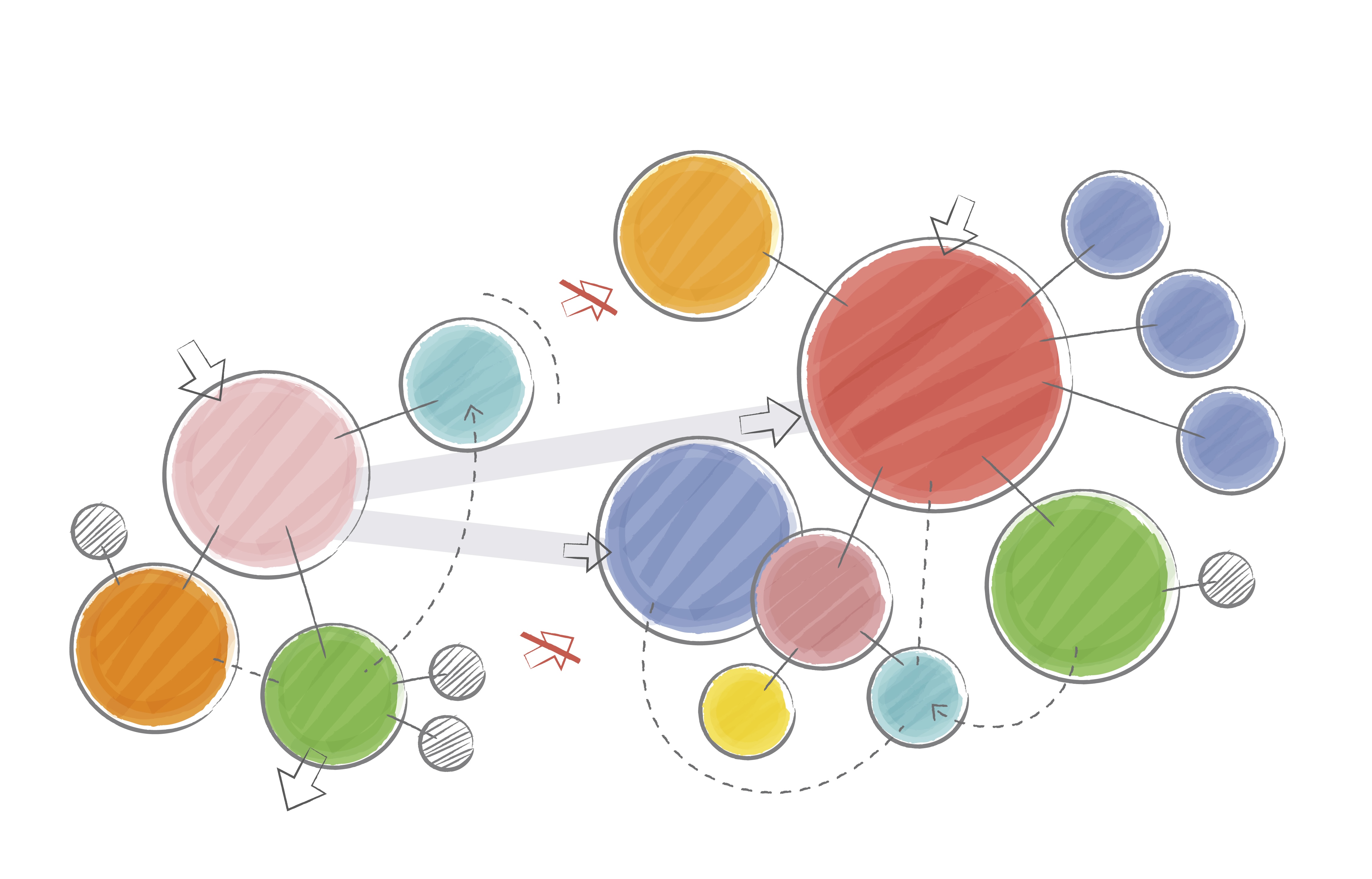
You have to ensure LLMs are able to resolve your brand into a single entity by providing as much clarity as possible.
Only after you’ve completed this step can you start dominating your topical field with hyper-focused content.
Essential optimizations include:
- Deploying Organization and LocalBusiness schema types with precise NAP and sameAs links to your socials, Wikipedia, and other trusted databases.
- Select 3 – 5 revenue-tied topic clusters to comprise your content library.
- Build pillar pages and 6 accompanying cluster pages per topic cluster.
- Add 20+ assets (tables, charts, videos, tools, etc.) per cluster to maximize engagement and authority.
These tactics help LLMs resolve your brand into one clean entity node that’s reinforced by niche authorities.
Step #2: Develop on-site topical depth
Once you’ve mapped out your content, it’s time to make every piece scream expertise through structure, semantics, and assets.
Don’t just settle for run-of-the-mill listicles and surface-level how-to posts.
Instead, roll up your sleeves and:
- Interview industry experts
- Produce in-depth guides containing unique steps and visual aids
- Conduct relevant experiments and research in your field (they don’t have to be extravagant or expensive)
- Provide hot takes that demonstrate your real-world experience and expertise
- Get visual with infographics, comparison tables, and video interviews
Also, don’t forget to create internal link networks by connecting:
- Pillar pages to cluster pages
- Cluster pages to pillar pages
- Topic clusters to service pages
Lastly, add author bylines (marked with Author schema) and use consistent entities (service names, locations) across all content.
Step #3: Source and secure editorial mentions 
For link-building, the goal isn’t DR chasing; it’s to secure editorial mentions on relevant websites.
Publishing original research and case studies (from step 2) works double duty here because they can attract links and citations from niche publications and news outlets.
HARO is also a great resource for networking with journalists in your niche, but the competition is very high.
Editorial guest posts are fair game, as long as it’s clear that they aren’t paid or sponsored in any way, and that they appear on credible blogs and trade publications.
These semantic signals all place you in the correct ‘semantic neighborhood’ to AI search systems.
Step #4: Stack multi-channel brand signals 
Next, it’s time to prove the real-world demand for your products and services through unlinked corroboration.
The good news is that you don’t have to be an instantly recognizable brand to prove the demand for your content.
Popular optimizations include:
- Appearing on industry podcasts
- Securing webinar slots
- Generating authentic reviews from customers across multiple platforms (not just GBP)
- Earn ‘best of’ listings in popular industry round-ups
These signals reinforce your expertise and boost genuine trust beyond your own website.
Step #5: Maintain freshness and track success
At this point, the goal becomes keeping your content fresh while measuring your strategy’s success.
That involves:
- Daily social media updates
- Monthly refreshes for pillar pages
- Weekly updates to cluster pages
At the same time, monitor your backlinks, brand mentions, AI citations, direct site visits, and number of impressions to gauge your success.
Each month, double down on the strongest signals while fixing the weakest gaps. Keep this up, and you’ll build and maintain vector authority on AI search platforms.
Concluding Thoughts: Vector Authority in AI Search
In summary, vector authority is multi-dimensional and involves establishing demonstrable credibility instead of using link volume (and other metrics) as a proxy.
Yet, just like organic SEO, vector authority has a compounding effect once it’s set up and frequently updated.
The challenge lies in resolving your brand’s entity and establishing a library of interconnected content.
Once that’s up and running, it’s all about maintaining the momentum.
Do you need expert help establishing vector authority for your brand?
Book a call with us to develop the perfect strategy for your needs.